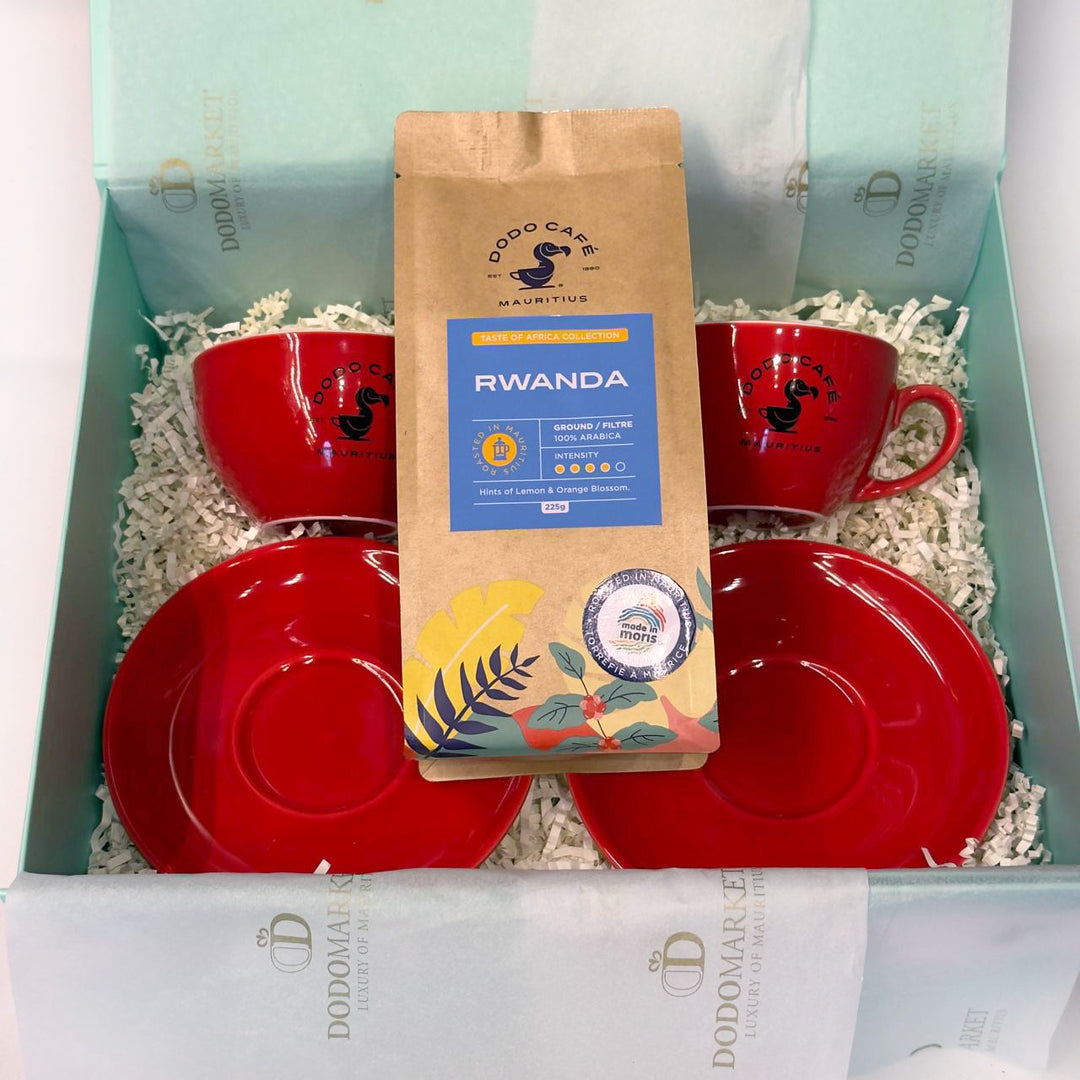
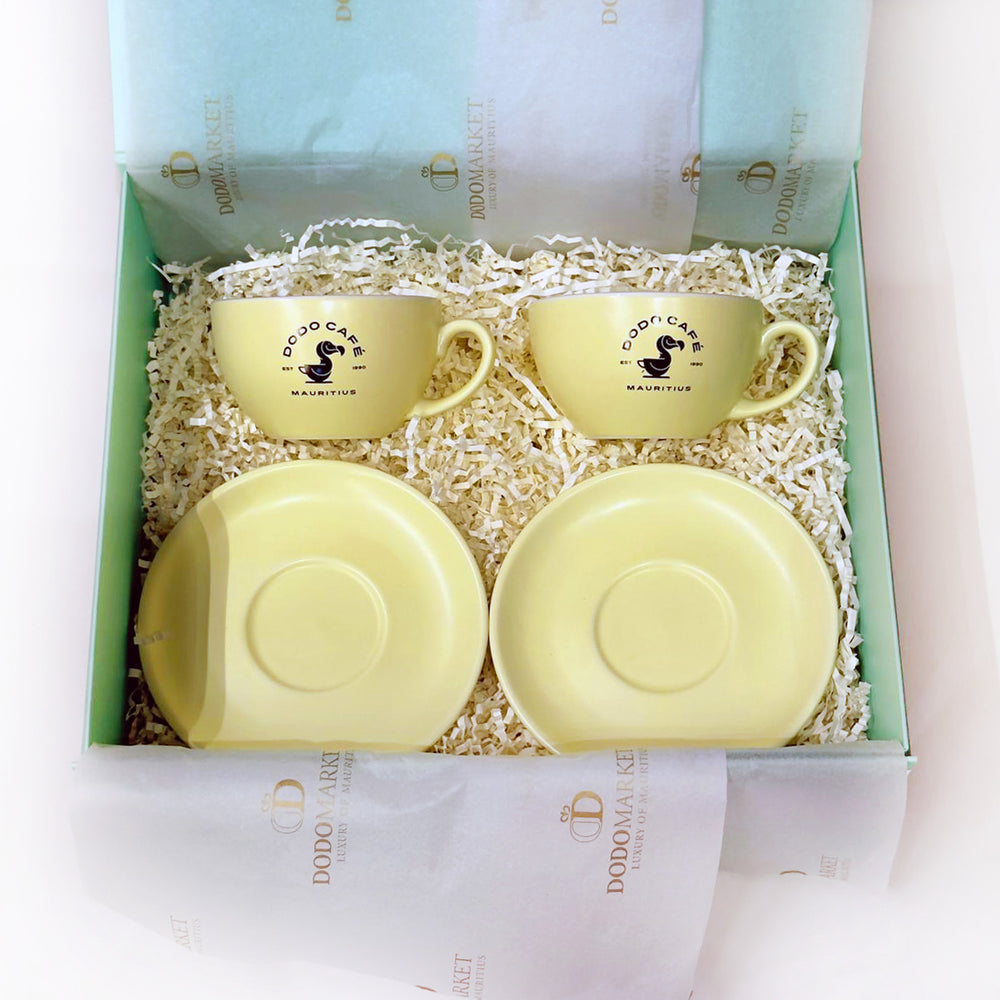
DodoMarket Souvenirs Mauritius Handmade Crafts by local Artisans

15 Best Mauritius Souvenirs
to Bring Home

What are the best souvenirs to bring home from Mauritius?

The souvenirs most worth bringing home from Mauritius are the ones actually made on the island: handmade model ships, original paintings, vanilla, specialty sugar, flavoured tea, local rum, woven basketry and dodo crafts. Almost all of them are sold at craft markets, factory outlets and workshop shops rather than at the airport, and most cost between Rs 100 and Rs 2,000. This guide covers what each item is, where on the island to buy it, roughly what it costs as of September 2026, and how to get it home.

A practical note before you start: the local currency is the Mauritian rupee (Rs). Markets and street stalls are cash-only, while shops, malls, museums and estate boutiques take cards. Changing money in a bank is usually better value than at a bureau de change, and rupees can only be converted back at the airport on departure.

  • Ship models. The island's signature craft. Mauritian workshops have been building scale replicas of historic sailing ships since the middle of the twentieth century, working from original drawings in teak, mahogany and other hardwoods, with rigging and sails fitted by hand. Most of the workshops are in the central plateau towns around Curepipe and Floréal, and around Goodlands in the north; several let you watch a hull being planked before you buy. A small desk model starts at a few thousand rupees; a large, fully rigged collector piece runs into tens of thousands. Ask for a rigid box before you pay - a good workshop will pack it for the hold. Our own curated selection of handmade ship models is available for same-day or next-day delivery on the island.
  • Cashmere and knitwear. Mauritius has a long-established textile and knitwear industry that has supplied European labels for decades, and the factory outlets around Floréal, Curepipe, Vacoas and Quatre Bornes sell overruns and seconds at a fraction of European retail. Expect roughly Rs 800-3,500 for a knit. The trade-off is choice: colours and sizes are whatever the last production run left behind, so it takes patience. Check seams and labels, since outlet stock often includes graded seconds.
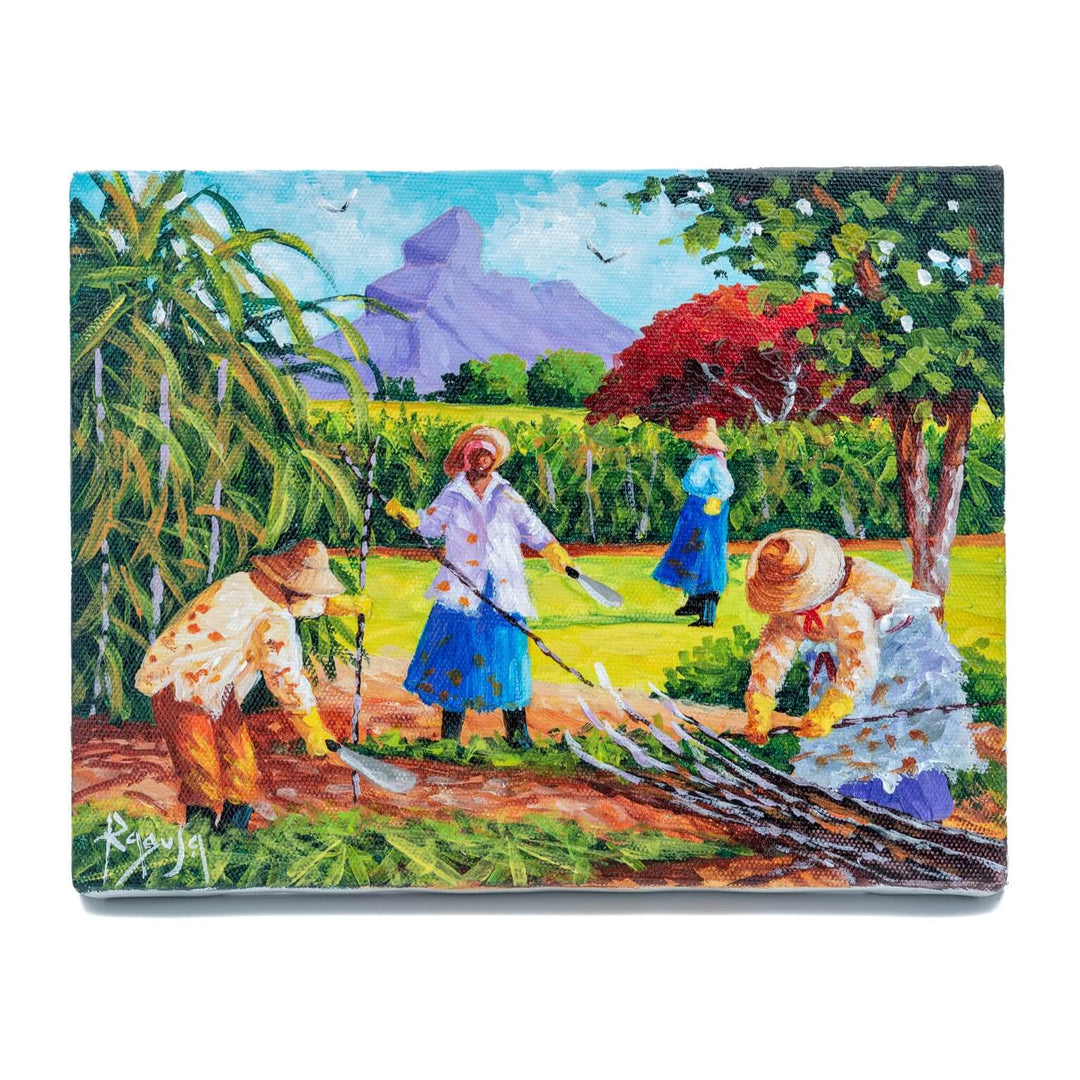
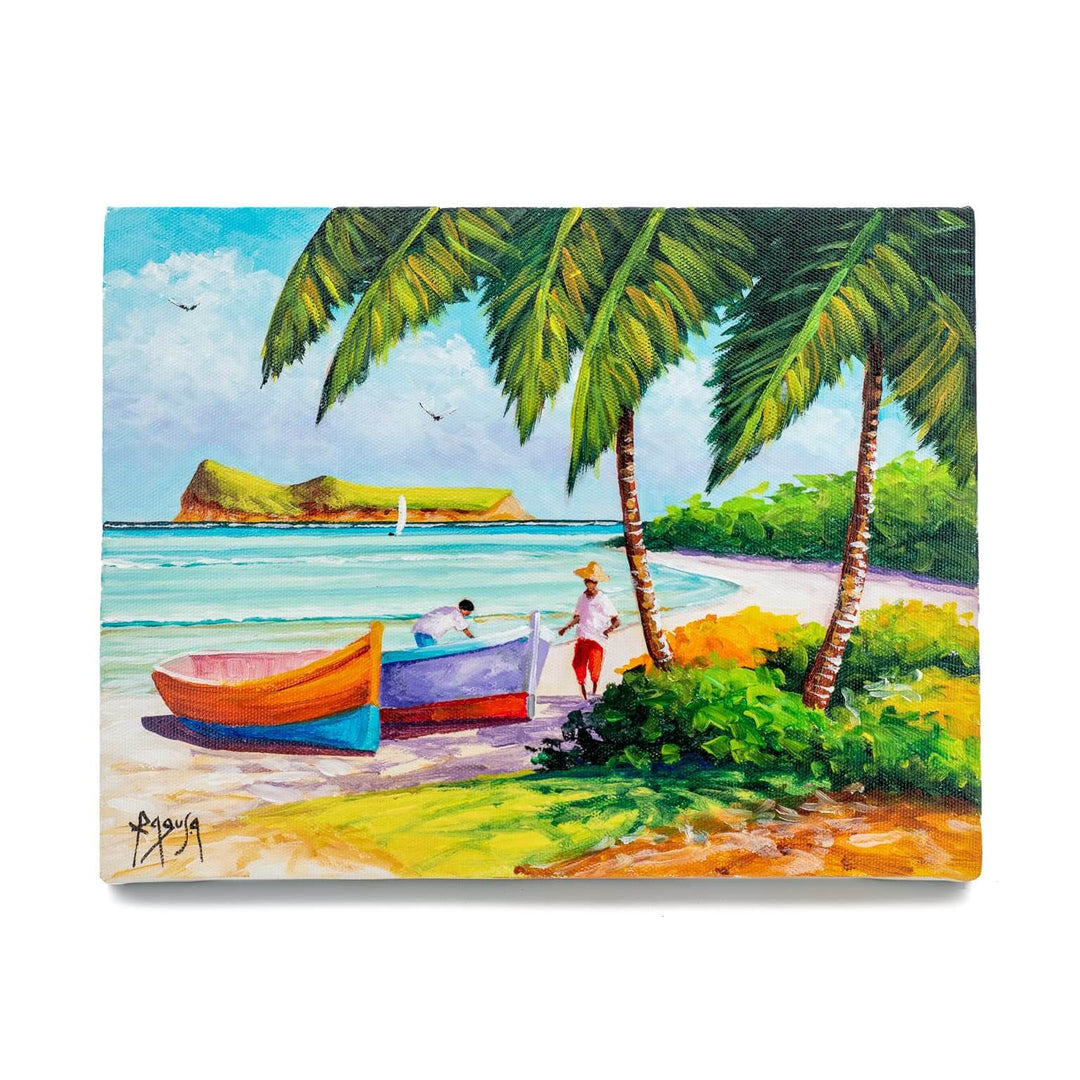
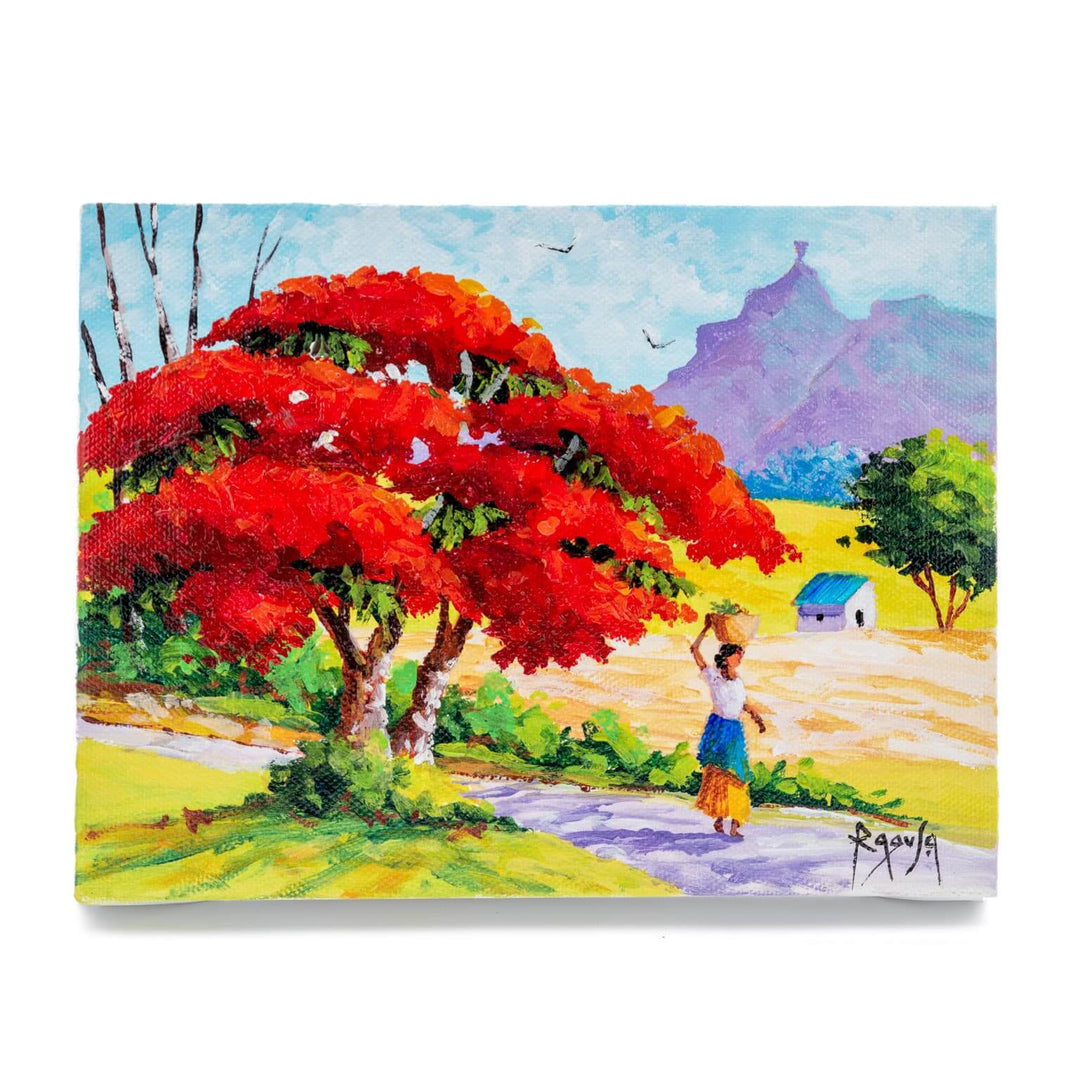
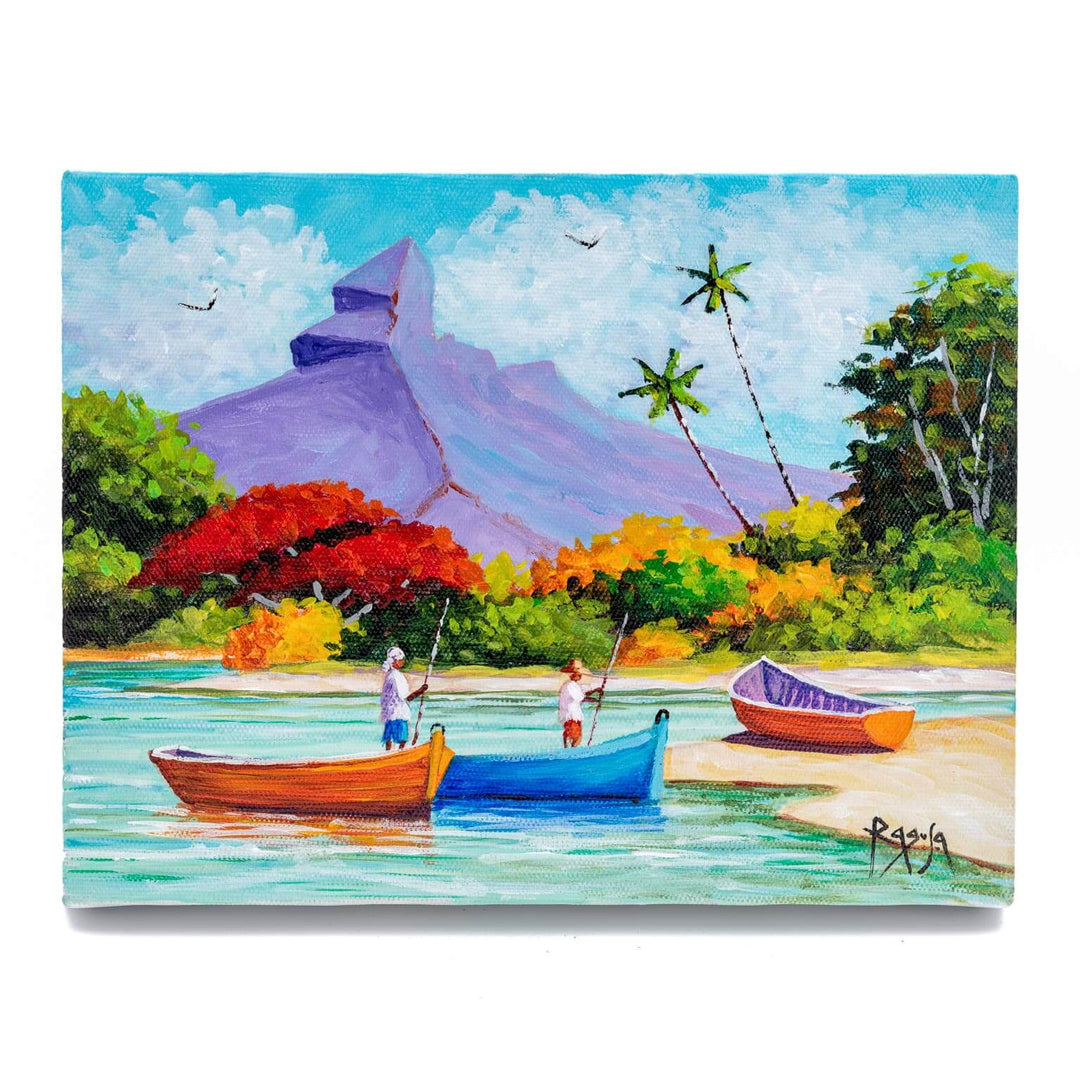
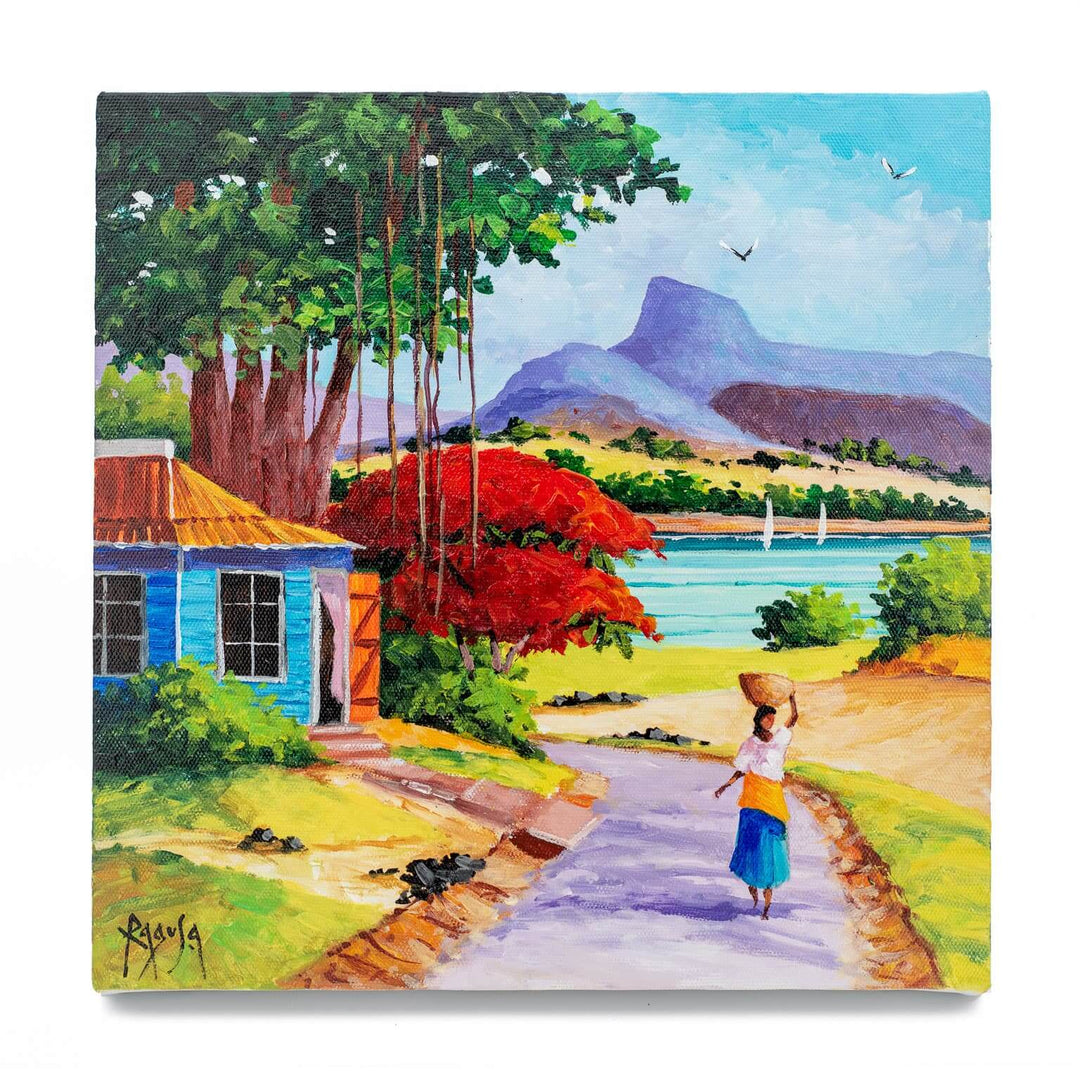
  • Paintings by local artists. An original canvas is the one souvenir nobody else will have. Mauritian painters work the island's own subjects - seascapes and pirogues, sega dancers, sugar-cane country, the street life of Port Louis - and unframed canvases roll into a cardboard tube for the flight, so ask for one unstretched if luggage is tight. Browse original paintings by selected Mauritian artists, including Pino Ragusa, who paints everyday scenes in the island's more picturesque corners.

Where do you buy souvenirs in Mauritius - markets, craft villages or shops?

Four markets cover almost everything: the Central Market in Port Louis for crafts and spices, the Grand Baie Bazaar in the north, Flacq market in the east and the Quatre Bornes market for textiles. Alongside them, the places that make the goods - model-ship workshops on the central plateau, the tea estate at Bois Chéri, the sugar museum at Beau Plan, the distilleries around Chamarel - all run their own shops, where provenance is certain and prices are usually no worse. Malls and factory outlets are the fixed-price option if you would rather not bargain.

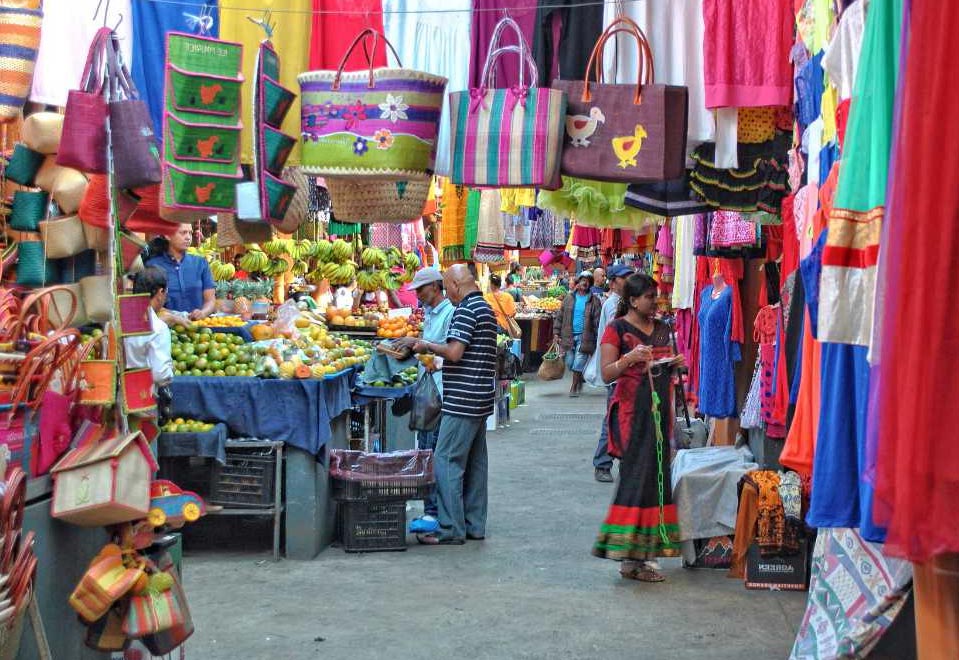
  • Port Louis Central Market (the Bazaar). The capital's main market and the widest single choice on the island: spices, vanilla, tea, basketry, printed textiles, dodo carvings and souvenir clothing sit alongside the fruit and vegetable halls. It is a working market, so go in the morning - craft stalls start closing in the afternoon and Sunday trading is shorter.
  • Grand Baie Bazaar. A compact craft market in the northern resort area: sarongs and textiles, wood carvings, jewellery, small ship models. Because it is tourist-facing, opening prices are high and bargaining is expected.
  • Flacq market. One of the largest open-air markets in Mauritius, at Centre de Flacq in the east, and mainly a local one - produce, clothing, household goods, with craft and spice stalls among them. Traditionally busiest on Wednesdays and Sundays. Good for seeing how Mauritians actually shop, less curated for visitors.
  • Quatre Bornes market. Long known as the island's cloth market: fabric, sarongs, clothing and knitwear seconds at the lowest prices you will find. Traditionally busiest on Thursdays and Sundays.
  • Workshops, estates and museums. Ship-model workshops around Curepipe, Floréal and Goodlands; the Bois Chéri tea factory and plantation in the south; L'Aventure du Sucre, the sugar museum in a former factory at Beau Plan near Pamplemousses; the rum distillery and the Seven Coloured Earths at Chamarel. Each has a shop attached, and buying where a thing is made removes any doubt about where it came from.
  • Malls and factory outlets. Air-conditioned, fixed-price, cards accepted: the knitwear outlets of Floréal and Curepipe, and the main shopping centres for packaged tea, sugar, rum and ready-made gift sets. The least atmospheric option and the easiest one when time is short.

How to buy well offline. Bargaining is normal at craft markets and street stalls and out of place in malls, museum shops and factory outlets, where the marked price is the price. At a tourist-facing craft stall, a realistic counter-offer is around two-thirds of the first price asked; stay friendly, and buying two or three pieces from the same seller gets you a better rate than haggling hard over one. Carry rupees in small notes, since market sellers rarely take cards and often cannot change a large note. Markets are morning places. And if you only have time for one stop, the Port Louis Central Market has the broadest range, while Quatre Bornes has the best prices on cloth.

What Mauritian handicrafts are worth buying?

The handicrafts worth luggage space are the ones with an island origin: silver jewellery made by local artisans, vacoas basketry, handmade pottery, wood carving, sega instruments and dodo pieces. Budget roughly Rs 100-250 for magnets and keyrings, Rs 200-600 for a small carved dodo or a ravanne drum, and Rs 400-1,500 for a good woven bag. The same object is almost always cheaper at a market or workshop than in a hotel boutique.

  • Jewellery. Mauritius has both a jewellery manufacturing sector and a diamond-cutting industry, and you will find gold and silver worked in modern, Indian and Muslim styles. Ask to see the hallmark on gold and silver and keep the receipt - some countries want it at customs. There is also unique silver jewellery with a contemporary twist, made by local artisans.
  • Basketry and woven goods. Weaving the long leaves of the vacoas (screwpine) into baskets, mats and bags is one of the island's oldest living crafts, and a well-made vacoas bag lasts for years. Look also for handmade pottery, wood carvings - figurines, boxes, picture frames - and, if you are shipping a container rather than packing a suitcase, locally made furniture, which is good quality and relatively inexpensive.
  • The dodo. The dodo was a large flightless pigeon found only on Mauritius, and it was gone within decades of European settlement in the seventeenth century; most of what we know about it comes from bones recovered from the island's Mare aux Songes marsh. It survives as the national emblem - it appears on the coat of arms - which is why it is printed, carved and stitched onto everything here. Wooden figurines, mugs, t-shirts, prints and soft toys are all easy to find, and the dodo is a souvenir that only makes sense bought in Mauritius.
  • Sega instruments. The ravanne, a wide goatskin frame drum tuned by warming it over a flame, is the heartbeat of sega - the Creole song and dance that grew out of the island's slave history and is recognised by UNESCO as part of Mauritius's intangible cultural heritage. It is usually sold with the maravanne, a flat rattle filled with seeds or shot, and a triangle. These are real instruments rather than ornaments, and they pack flat.

Which Mauritius souvenirs are unique to the island?

Two things here are genuinely Mauritian and hard to find anywhere else: jars of the coloured earths from Chamarel, and locally made ocean-themed ceramics and prints. Add island textiles and the teas, salts and oils of a local artisanal producer such as Hortus Vitae, and you have a bag that could not have been packed in another country. Expect around Rs 150-500 for a sand jar and Rs 300-1,200 for a handmade ceramic piece.

  • Coloured sands. At Chamarel, in the south-west, volcanic clay has weathered into dunes of distinct red, brown, violet and blue bands - the Seven Coloured Earths, caused by iron and aluminium oxides separating as the basalt broke down. The sealed glass jars and bottles of layered sand sold in gift shops across the island, and the little pictures built up inside them, take their name and their palette from that site. Light, cheap and instantly recognisable.
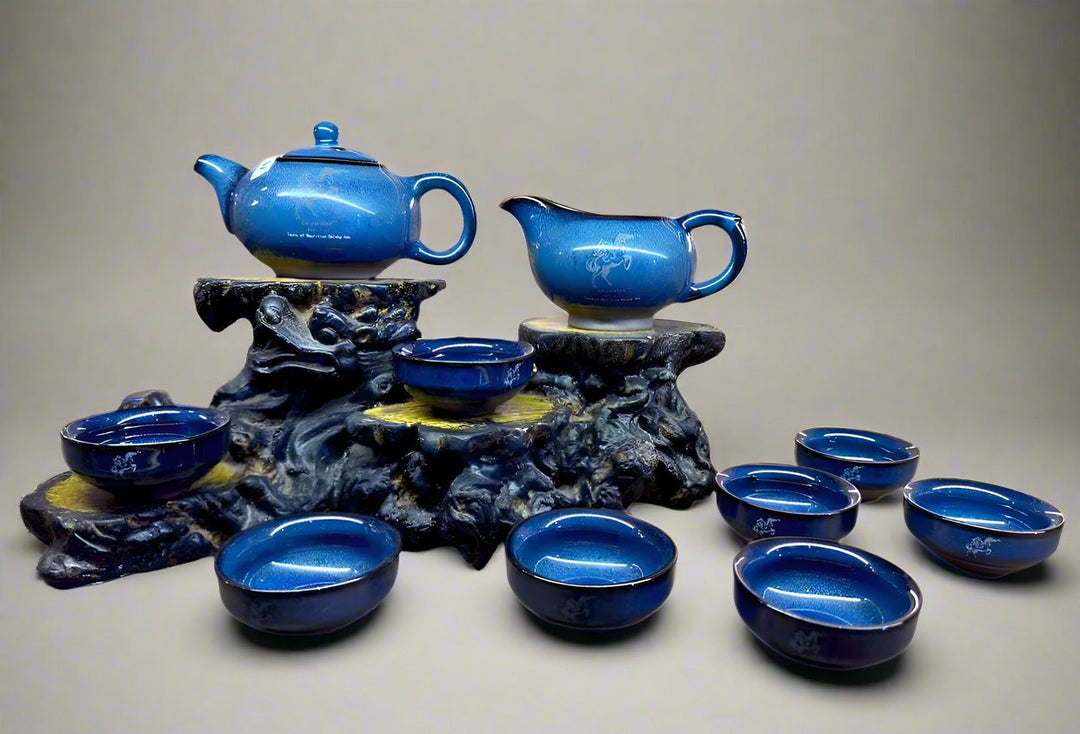
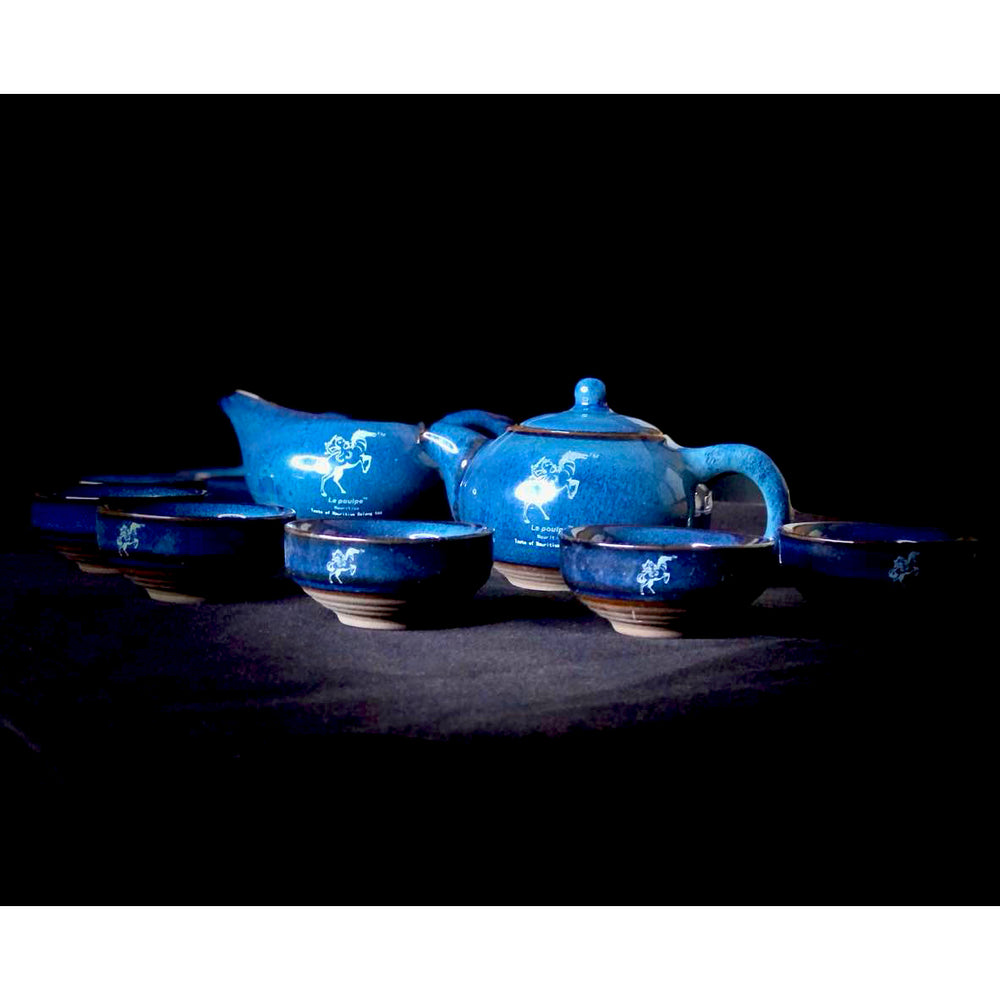
  • Ocean-themed crafts. Handmade ceramics with reef and fish motifs, seascapes, and household pieces printed with Mauritian designs are among the best-selling souvenirs on the island. Buy the made things rather than the taken ones: corals are protected under international trade rules and many shells with them, so a piece of reef bought at a stall can be confiscated at your own border, and a ceramic version cannot.
  • Clothing and textiles. The island's textile industry is the reason a t-shirt or a knit costs less here than at home. Factory outlets in Floréal, Curepipe, Vacoas and Quatre Bornes sell overruns and seconds of labels made locally for export; the Quatre Bornes market is the cheapest source of fabric and sarongs. Airport duty-free is a separate thing altogether - you will need your passport and boarding pass, and it is aimed at spirits, perfume and cosmetics rather than clothing.
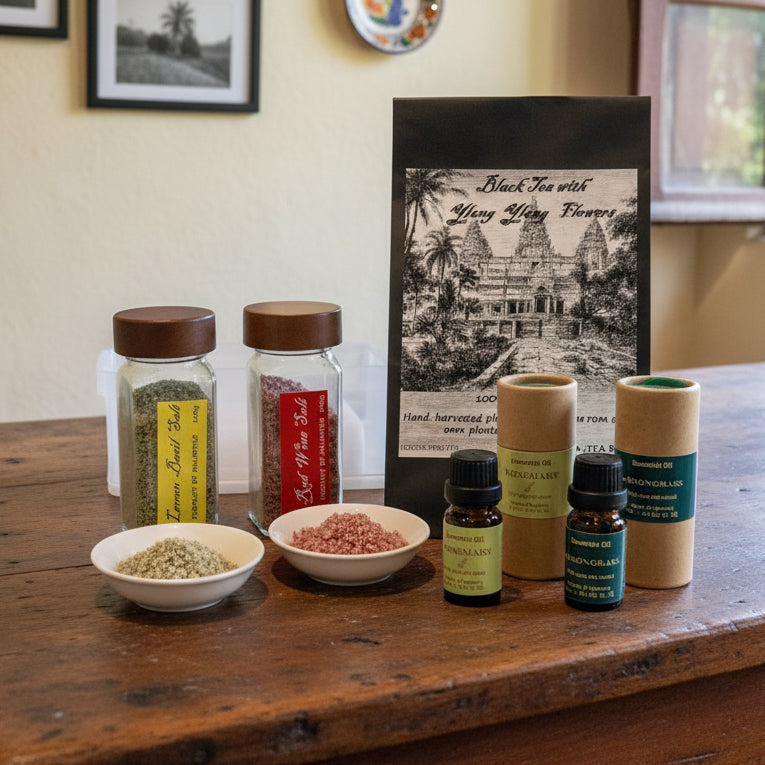
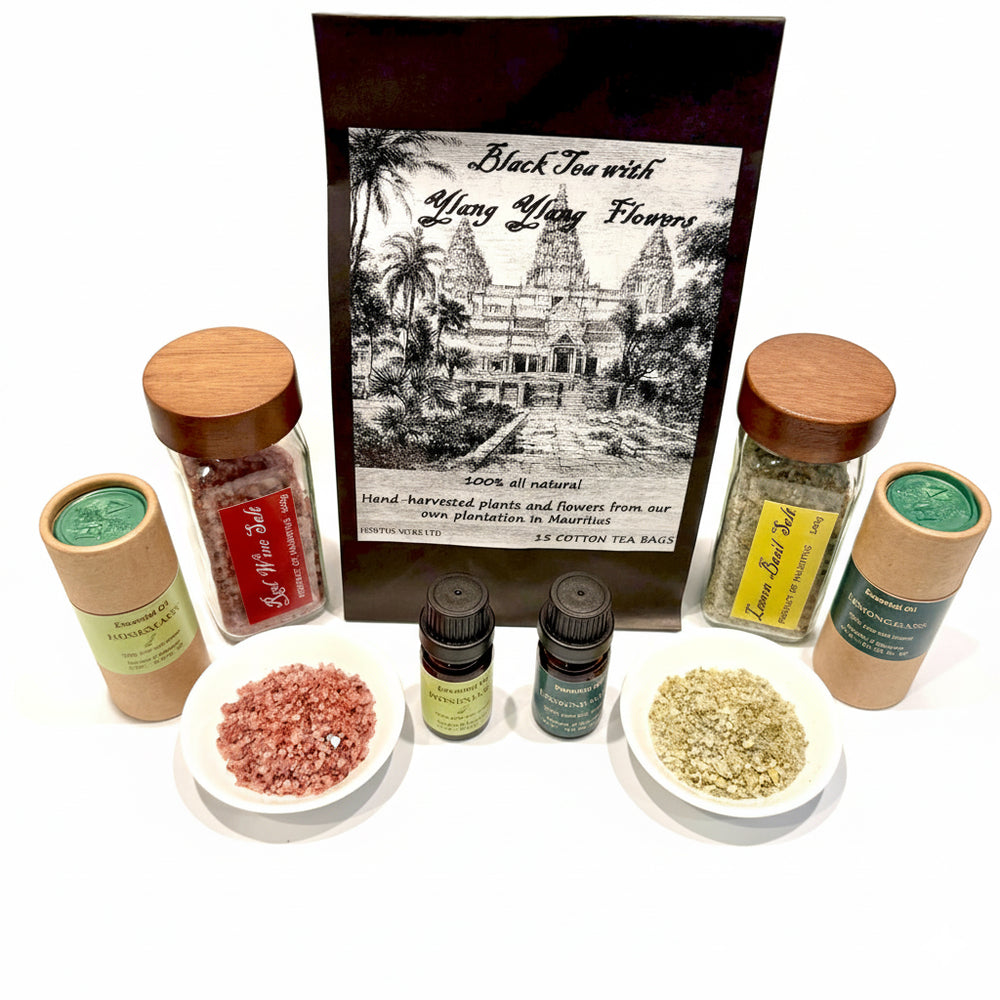
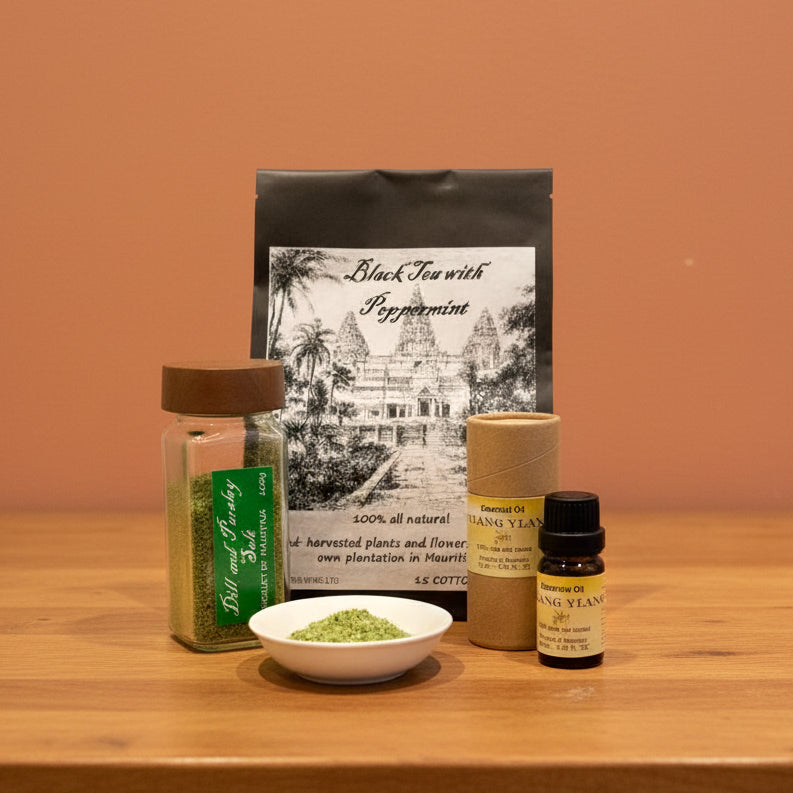
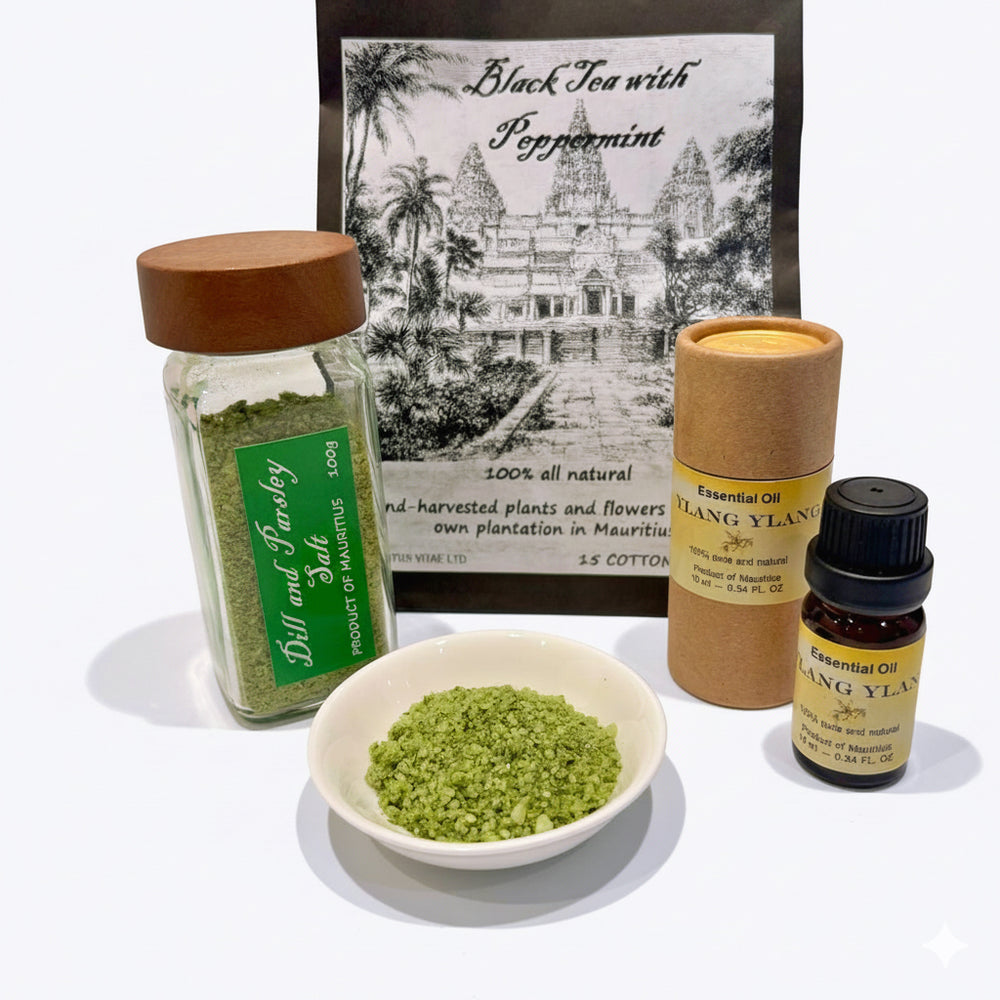
  • Flavours of Mauritius. Hortus Vitae is a local artisanal brand producing organic teas, flavoured salts, essential oils and hydrolats grown and hand-crafted on a family plantation in Mauritius, using eco-friendly methods. Small, sealed and light - the easiest edible souvenir to carry, and a good gift for someone who already has enough ornaments.

What food and drink should you bring back from Mauritius?

Sugar, rum, tea and vanilla are the four edible souvenirs the island is genuinely known for, and all four travel well. Buy sugar and tea at the estate shops, rum at a distillery or a supermarket, and vanilla and spices at a market. As of September 2026, budget roughly Rs 80-200 for a 250g bag of specialty sugar, Rs 200-450 for a box of flavoured tea and Rs 350-900 for a standard bottle of local rum.

  • Cane sugar. Sugar cane shaped the island's landscape, its economy and much of its history, and Mauritius specialises in unrefined specialty sugars - demerara, muscovado, golden granulated and several more - which keep some of the molasses and taste of it. L'Aventure du Sucre, at Beau Plan near Pamplemousses, is a former factory turned museum with a shop that sells the whole range; a 300g bag in a presentation pack is the classic small gift, and a boxed set of several sugars typically costs Rs 300-500.
  • Mauritian rum. The island distils both molasses-based rum and, in the agricultural style, rum made from fresh cane juice. Green Island white rum is the everyday reference bottle; distilleries such as the one at Chamarel run tours that end in a tasting, and Domaine Les Pailles pairs a colonial estate setting with the same. A standard 70cl bottle runs about Rs 350-900, aged and premium expressions Rs 1,500-4,000. One rule to remember: bottles bought in town must go in your checked luggage, not your cabin bag.
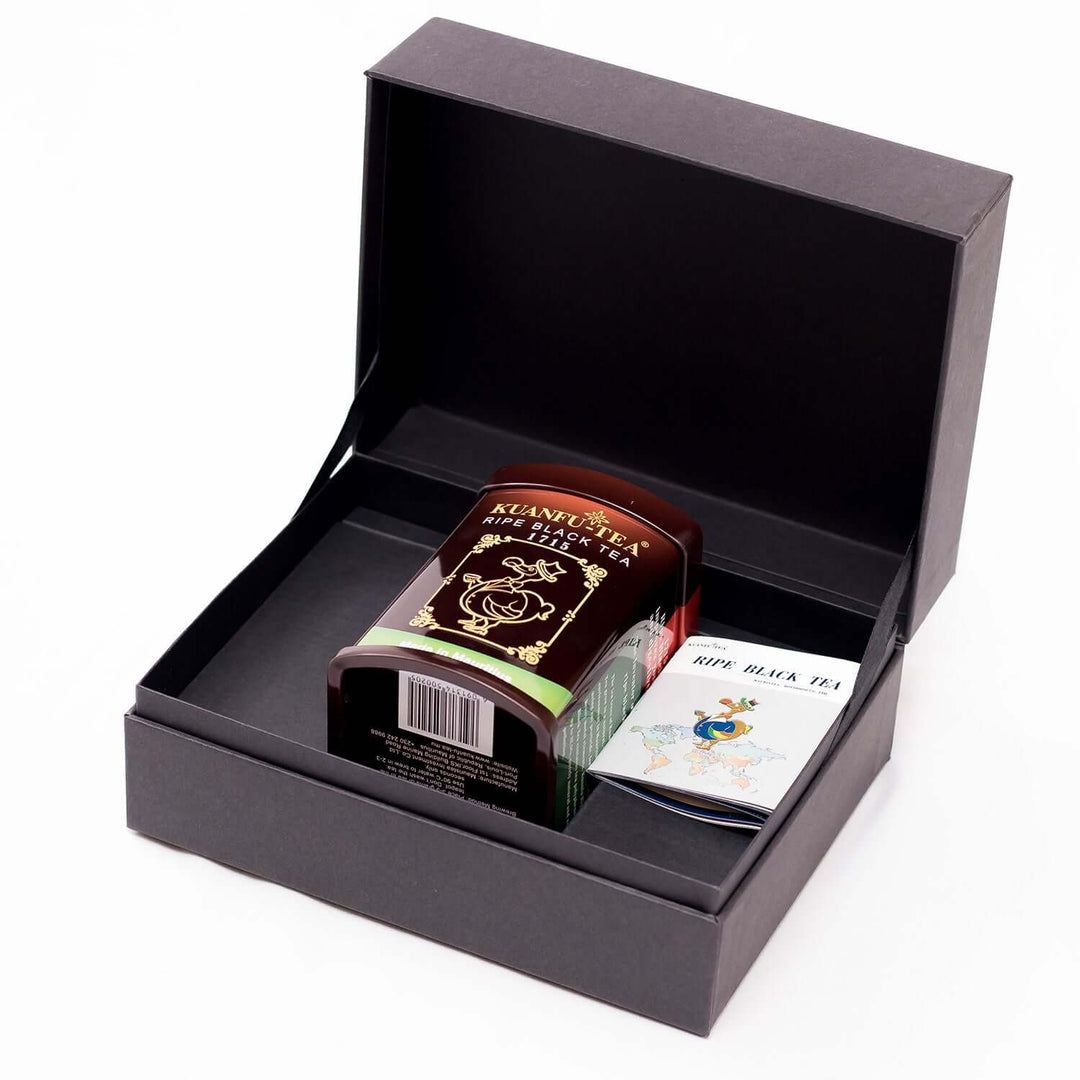
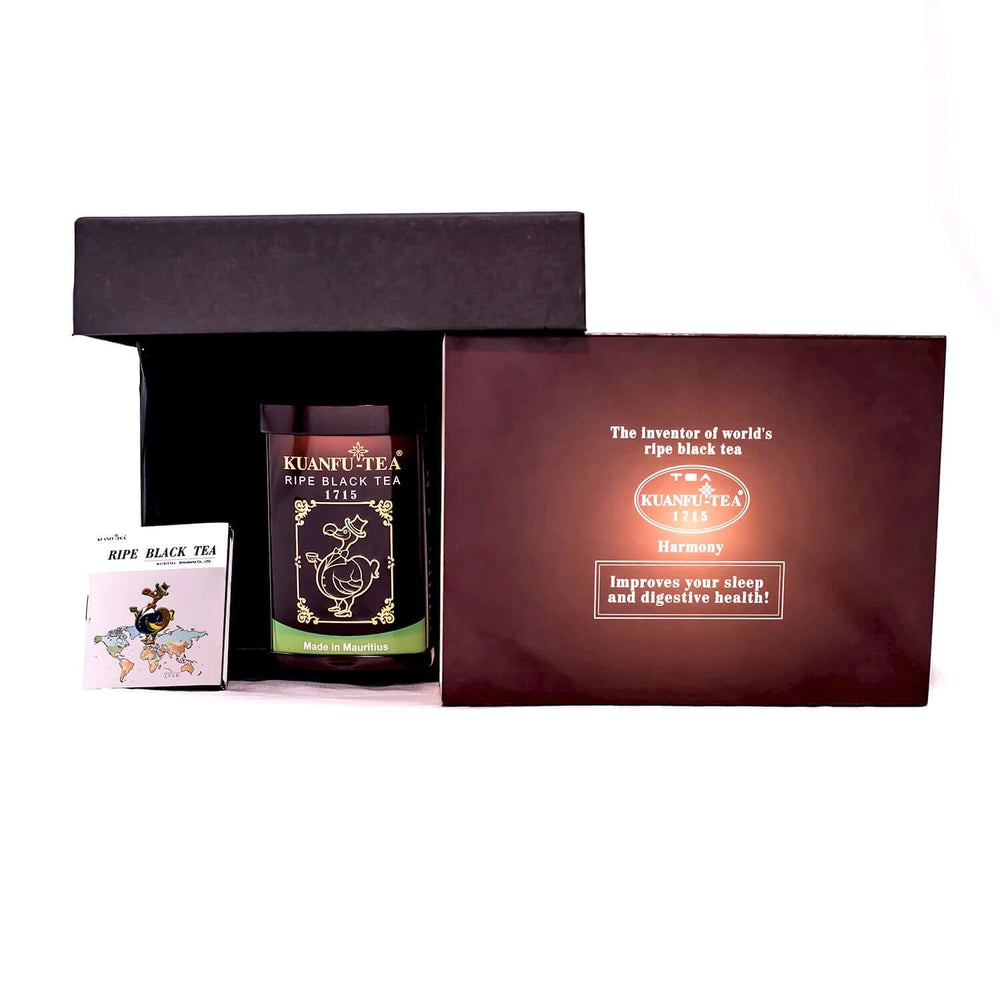
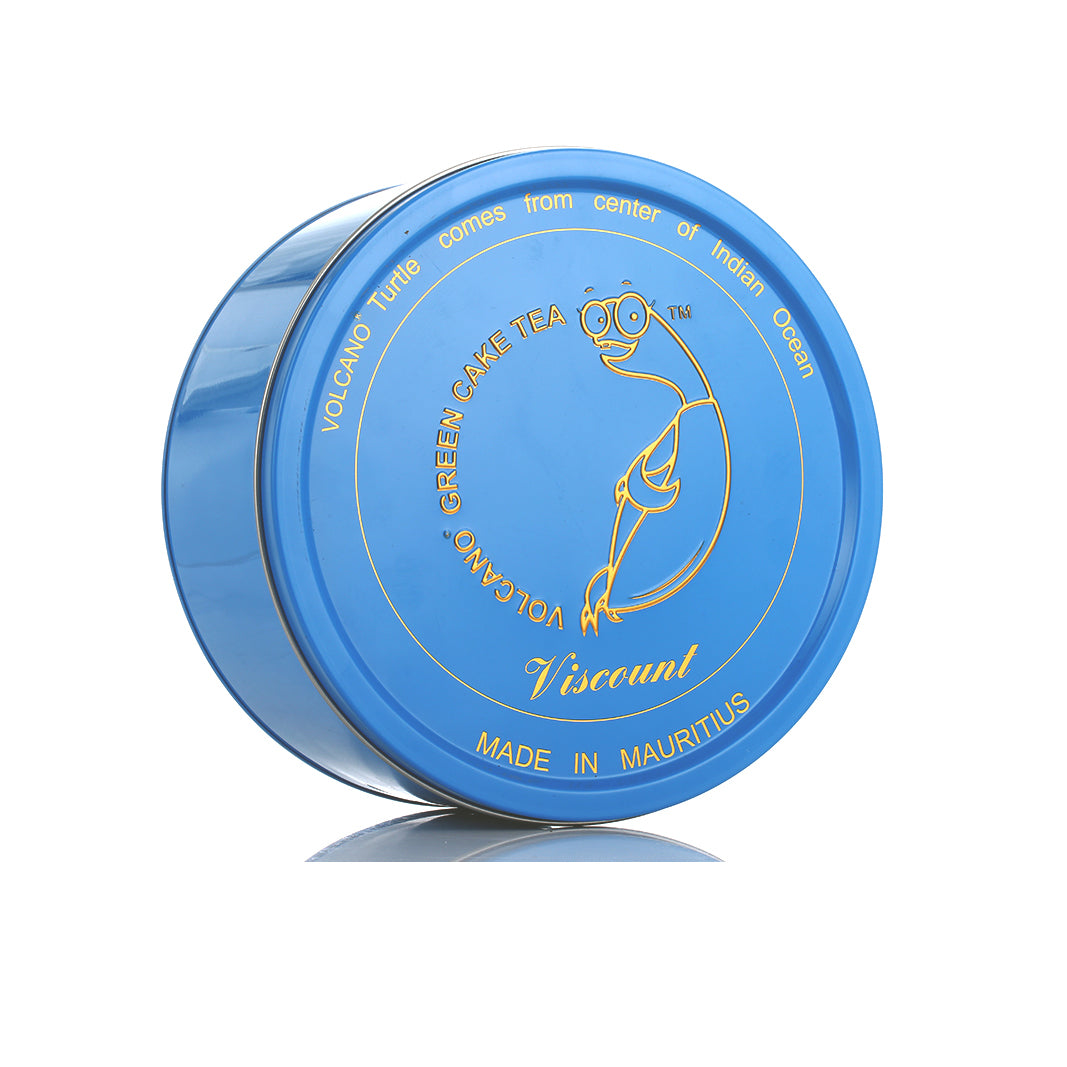
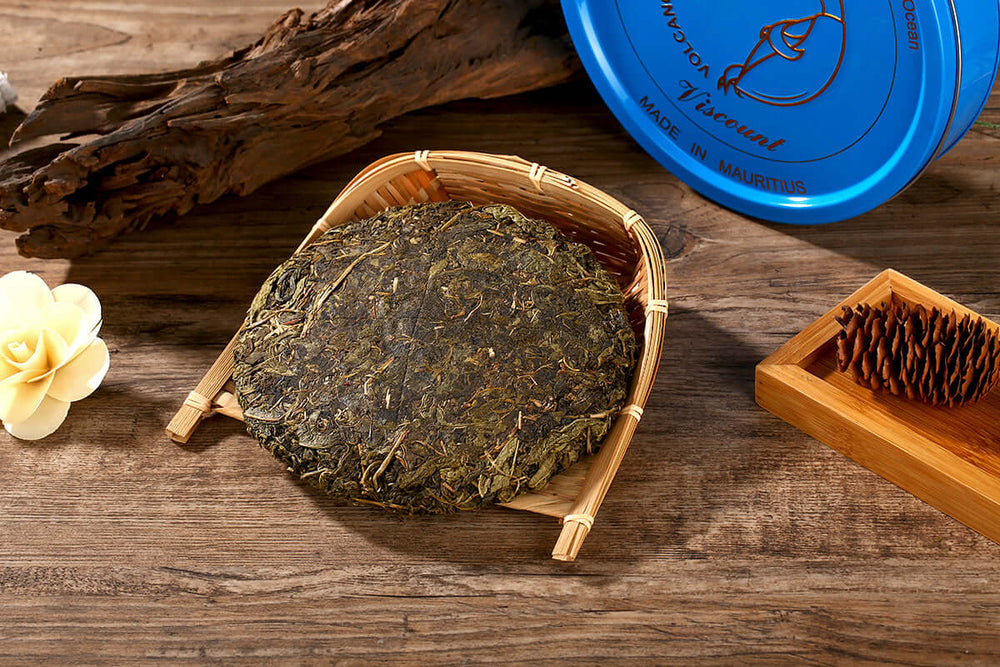
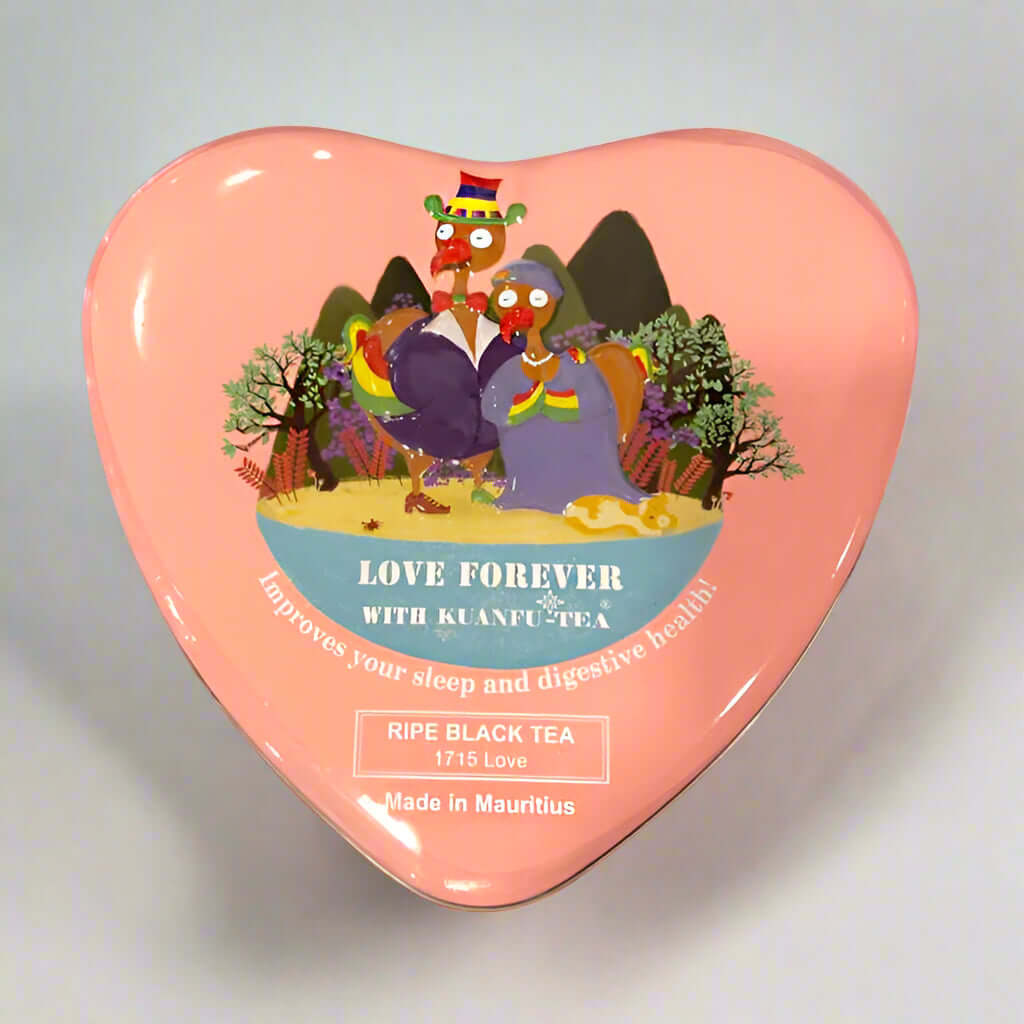
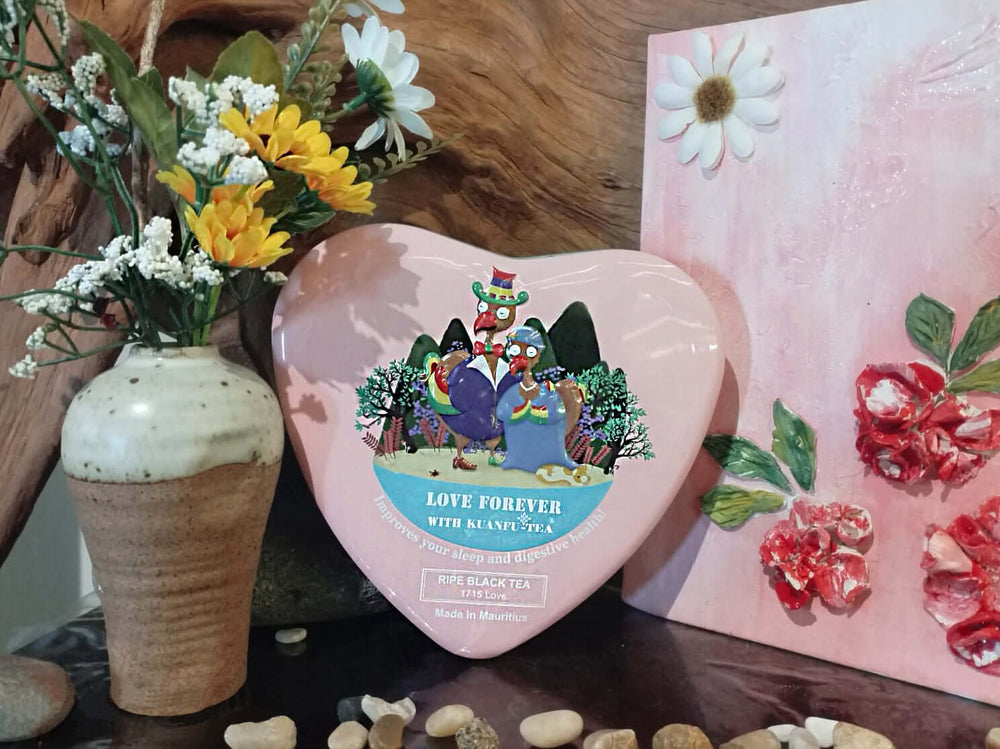
  • Tea. Bois Chéri, in the south, is the island's best-known plantation, factory and tea museum, and a visit normally includes a tasting. Vanilla tea is the classic thing to carry home, with coconut a close second; a 200-250g box or tin costs roughly Rs 200-450. Tea is sealed, light and unbreakable, which makes it the safest edible souvenir in a suitcase.
  • Market food to look for. Beyond the four classics, the markets sell achards - pickled vegetable relish - chilli pastes, tamarind sweets and Creole spice mixes, all cheap, sealed and unmistakably Mauritian. Buy them packaged rather than loose so they survive the flight and are easy to declare.

Is it worth bringing back Mauritian vanilla, spices and fruit?

Vanilla and spices, yes; fresh fruit, usually not. Dried vanilla pods and sealed spice mixes are light, admissible almost everywhere and far cheaper here than at home - a tube of four to six pods typically costs Rs 250-600 at a market. Fresh fruit is a different matter: many countries prohibit importing fresh produce, so check your own customs rules before you buy a pineapple for the plane.

  • Vanilla. Mauritius grows Bourbon-type vanilla, and pods are sold in sealed glass tubes at markets, estate shops and supermarkets. Choose pods that are dark, supple and slightly oily rather than dry and brittle, and smell the tube if the seller will let you. Market prices are well below what the same pods cost at a tour stop or a hotel boutique.
  • Spices. Mauritian cooking is Creole, Indian, Chinese and French at once, and the spice stalls reflect it: masala blends, curry powders, whole cinnamon and cloves, dried chilli, turmeric. Buy sealed packets rather than loose scoops - they keep better, survive a suitcase and are simpler to declare at the other end.
  • Fruit. Pineapple, papaya and mango are at their best here, and the small Victoria pineapple is a local speciality. If your destination does allow fresh produce, choose firm, slightly under-ripe fruit, which is the only kind that arrives intact. If it does not, buy the dried or preserved version instead.

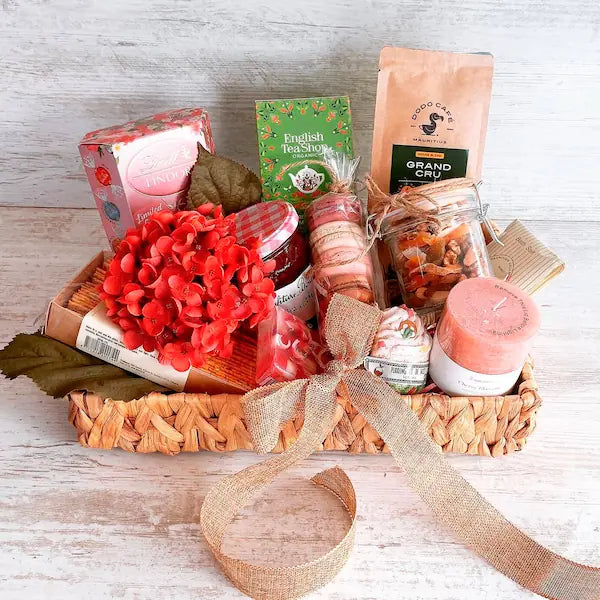
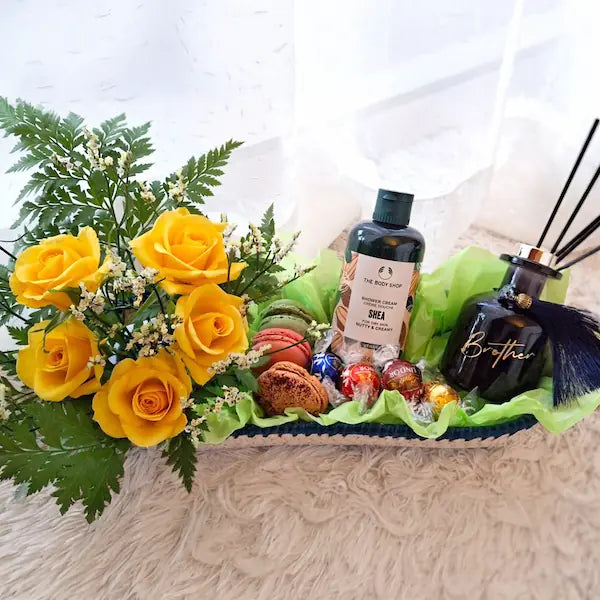
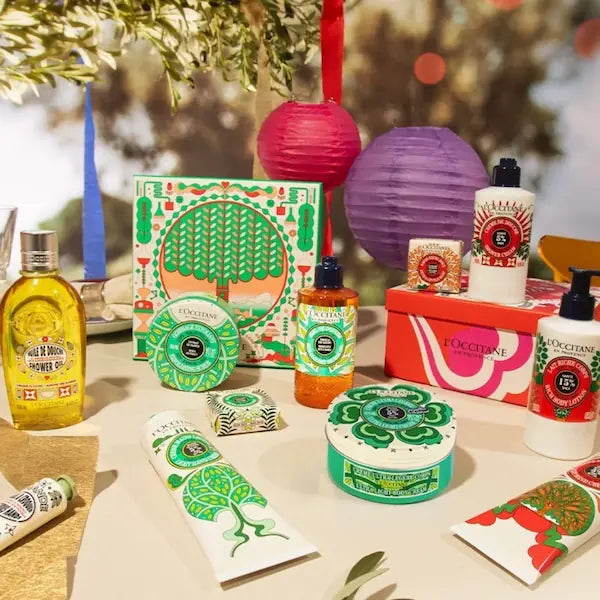
If you would rather not spend a day of your holiday shopping, most of what is described above can also be ordered online and delivered to your hotel or to any address in Mauritius - the collections below are a starting point.

How much do Mauritius souvenirs cost, and how do you get them home?

Most Mauritius souvenirs cost between Rs 100 and Rs 2,000, markets are cash-only, and the only real packing problems are rum, which must travel in the hold, and anything fragile. The ranges below are indicative retail prices seen on the island as of September 2026 and vary with shop, size and season. Nothing here is a customs ruling: allowances differ by country and change, so check your own customs authority before you fly.

  • Fridge magnets, keyrings, postcards - Rs 100-250
  • Coloured-sand jar or bottle - Rs 150-500
  • Small carved dodo, or a ravanne drum - Rs 200-600
  • Specialty sugar, 250g - Rs 80-200
  • Flavoured tea, 200-250g box or tin - Rs 200-450
  • Vanilla pods, tube of four to six - Rs 250-600
  • Local rum, 70cl - Rs 350-900 (aged or premium, Rs 1,500-4,000)
  • Woven vacoas bag or basket - Rs 400-1,500
  • Handmade ceramic piece - Rs 300-1,200
  • Knitwear from a factory outlet - Rs 800-3,500
  • Handmade model ship - from a few thousand rupees for a desk model, into the tens of thousands for a large rigged piece

Rum and the 100 ml rule. Liquid containers larger than 100 ml cannot pass through airport security in cabin baggage, so a bottle bought in town has to go in your checked luggage, wrapped in clothing or a padded sleeve. The alternative is to buy after security in the airside duty-free shop; if you have a connecting flight, leave the bottle in its sealed tamper-evident bag with the receipt visible inside, or it can be taken from you at the transfer airport.

Customs, in general terms. Most countries let arriving travellers bring in a limited duty-free quantity of spirits - commonly around one litre from outside their own customs area - plus a value limit on gifts. Dried and processed goods such as vanilla pods, tea, sugar and packaged spices are normally admissible; fresh fruit, plants, seeds and items of animal origin are frequently restricted or banned, and coral and many shells fall under international trade rules. Declare what you carry, keep your receipts, and read your destination's customs page before you buy - those rules are set by your country, not by the seller.

Packing. Model ships and ceramics need a rigid box and padding, and a good workshop will supply one, so ask before you pay. Keep vanilla in its sealed tube or the whole suitcase will smell of it, put sugar and spices inside a zip bag in case a corner splits, and carry paintings rolled in a cardboard tube rather than framed.
Souvenirs-Market-Gift-Shop-Mauritius

ORDER ONLINE · HOTEL DELIVERY

Skip the souvenir hunt

Get authentic Mauritius souvenirs — ship models, paintings, local crafts, tea and more — delivered to your hotel the same or next day, at the same prices as the shops (delivery just Rs 399). Rated 4.8★ by thousands of customers.

Shop Mauritius Souvenirs
Gifts and souvenirs from Mauritius

READY WHEN YOU ARE

Order Mauritius souvenirs online

Browse the full souvenirs collection and we'll deliver islandwide — to your hotel, your home, or as a gift. Same-day or next-day delivery, shop prices, Rs 399 flat.

Shop the Souvenirs Collection

Ordering Mauritius souvenirs — FAQs

For the widest choice in one stop, the Central Market in Port Louis - crafts, spices, vanilla, tea and textiles, best visited in the morning. Quatre Bornes market is cheapest for cloth, Grand Baie Bazaar is the most convenient in the north, and the workshops and estate shops (model ships around Curepipe, tea at Bois Chéri, sugar at Beau Plan, rum at Chamarel) sell at source. Markets are cash-only; malls, outlets and estate shops take cards.

Yes. Browse our souvenirs collection and order online in minutes — ship models, paintings, local crafts, tea and more — and we deliver across Mauritius. No need to spend your holiday hunting through gift shops.

Yes — we deliver to hotels, villas and homes anywhere on the island. Order before our daily cut-off for same-day delivery, or pick a delivery date that suits your stay.

Yes. We match the prices you'd pay in the retail shops, and delivery is a flat Rs 399 — so ordering online saves you the trip without costing more.

Absolutely. Add a free greeting-card message at checkout and have your souvenirs delivered to any address in Mauritius — ideal for sending a keepsake to family or friends on the island.

Handmade ship models, original Mauritian paintings, sterling-silver jewellery, handmade pottery and ceramics, dodo-themed gifts, local teas and Flavors of Mauritius (Hortus Vitae) artisanal products — and much more in the souvenirs collection.

Rum has to travel in checked luggage, because containers over 100 ml cannot go through airport security in a cabin bag - or buy it airside in duty-free and keep the sealed bag closed if you have a connection. Dried vanilla pods, tea, sugar and packaged spices are normally admissible, while fresh fruit, plants and coral are commonly restricted. Allowances differ by country and change, so check your own customs authority before you buy.